Sign up today and join our mailing list to receive the latest news, project updates, event invitations, and insights from the PRIMARY project.
Grass is not just grass
Mar 27, 2026
Green grass grows everywhere – in city parks, roadsides, cow pastures, hay and silage fields, mountain slopes. While growing, it provides many ecosystem services such as carbon sequestration, biodiversity, erosion as well as flood control and nutrient recycling. Grass is the major dietary component of ruminants such as cattle and sheep, and thus, indirectly provides animal products for human use.
In the project PRIMARY – New business for farmers and cooperatives in rural areas by local upcycling solutions using underutilised agricultural feedstocks – we develop new ways to valorise grass in a more versatile manner than just as a feed for ruminants. This will allow us to benefit from grass’s ability to produce large amounts of biomass in a sustainable way even in marginal conditions. Inclusion of grass in crop rotations allows also arable farming to benefit from perennial grasses to soil quality.
Grass biomass contains several valuable components, including proteins, carbohydrates, minerals and vitamins. The green biorefinery envisaged for grass valorization will fractionate the biomass into different streams that are further processed into high-added-value products, such as food, feed and material applications.
Grass season 2025 in PRIMARY
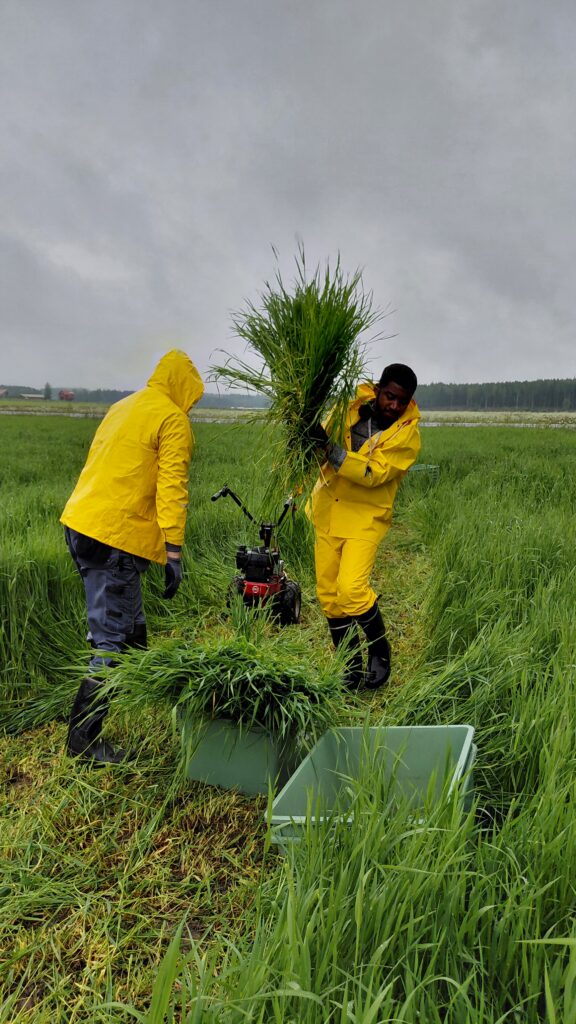
Last summer was the first season in the PRIMARY project for grass harvesting for green biorefining. We targeted pure timothy and red clover swards in Jokioinen, Finland. Summer 2025 was very rainy, which was good for grass growth. The humid conditions did however challenge the harvesting procedures and raincoats were very much needed during the field work… Under our pilot-scale conditions, the grass biomass collected could be luckily dried artificially so that we did not need to work with suboptimal raw materials. However, the risk of unfavourable harvesting conditions is inevitably something that is faced occasionally in practice as well.
The first challenge of a green biorefinery is the stabilization of the biomass. Fresh grass has a very high moisture content – about 80 % of it is water. The grass starts to spoil within hours, so it needs to be treated immediately to stabilize the material. The big choice regarding the process development is whether the grass is processed as fresh, or is it preserved after the harvesting. For preservation, there are two practically feasible options: to dry it, or to ferment it into silage. We used all three options, as they all have their good sides – as well as drawbacks. Ultimately the choice depends on the targeted product portfolio and processing steps of a particular green biorefinery case.
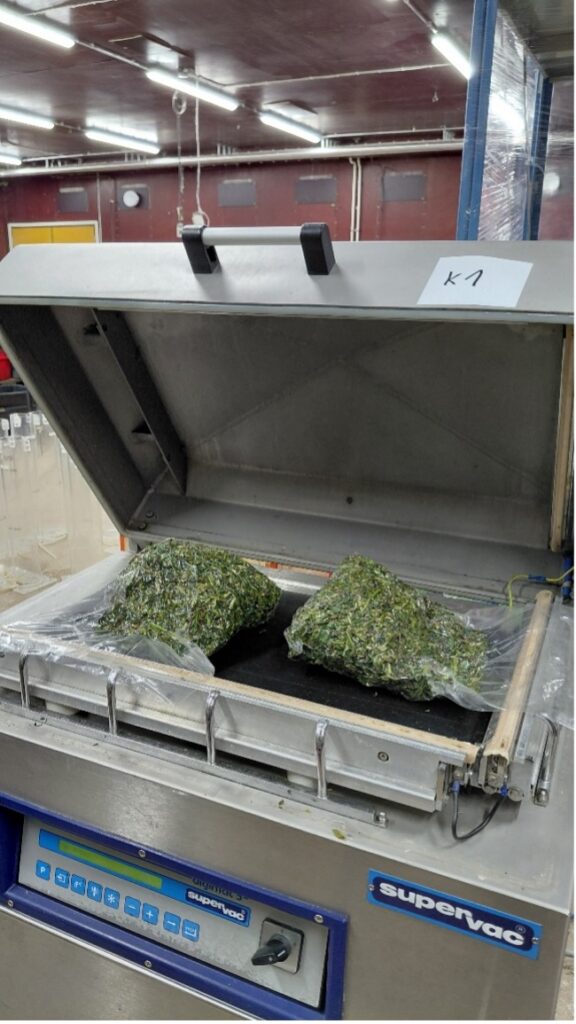
Within our research project, fresh grass was frozen for experimentation over extended period of time. Artificial drying was used to make dry grass, or hay. Ensiling was conducted in plastic vacuum bags. The airtight bags represented the large bunker of tower silos of cattle farms where large amounts of silage is routinely produced to feed animals.
After the summer season, project partners at Luke, Valio and VTT processed and analysed the pre-processed grass samples in several laboratories to explore their potential for different applications.
Novel grass-based products by PRIMARY
Feed and food proteins by extraction
Currently pigs and poultry cannot utilise the proteins within grass, as they are bound within the fibrous cell walls that are indigestible to monogastric farm animals. Ruminants harbour microbes in their rumen, that digest the cell walls for them. When grass juice is mechanically pressed, and proteins precipitated, a product with high concentration of good quality protein can be produced, that can be used for the nutrition of monogastrics. Such a product could be used as a food ingredient as well, but before commercial use, the novel food authorisation within the EU would need to be acquired.
Fermentation of grass for microbial protein-rich biomass
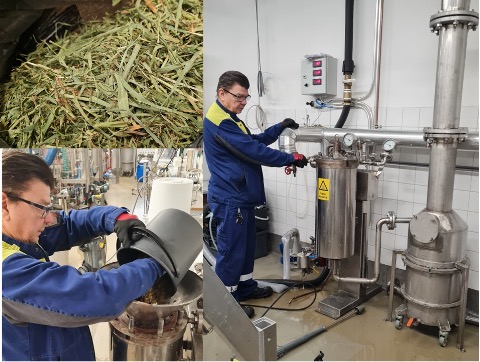
The whole grass biomass or the fibre residue after mechanical pressing of the grass to get juice for protein separation, can be used as a feedstock in microbial biomass production. Prior to that grass cell wall structure must be loosened with steam explosion to allow enzymes to release sugars for microbes to use for their growth. This approach has been applied to dried and ensiled grass samples at VTT Espoo facilities. After steam explosion, the various grass materials are treated with enzymes and after that we are ready for fermentation. Promising amounts of fermentable sugars have been obtained from all studied materials: pressed, dried and ensiled grass. Currently, we are comparing how well selected microbial hosts are growing in these feedstocks and based on the outcomes, we will select the best options to be piloted in the VTT fermentation hall.
Fibrous materials
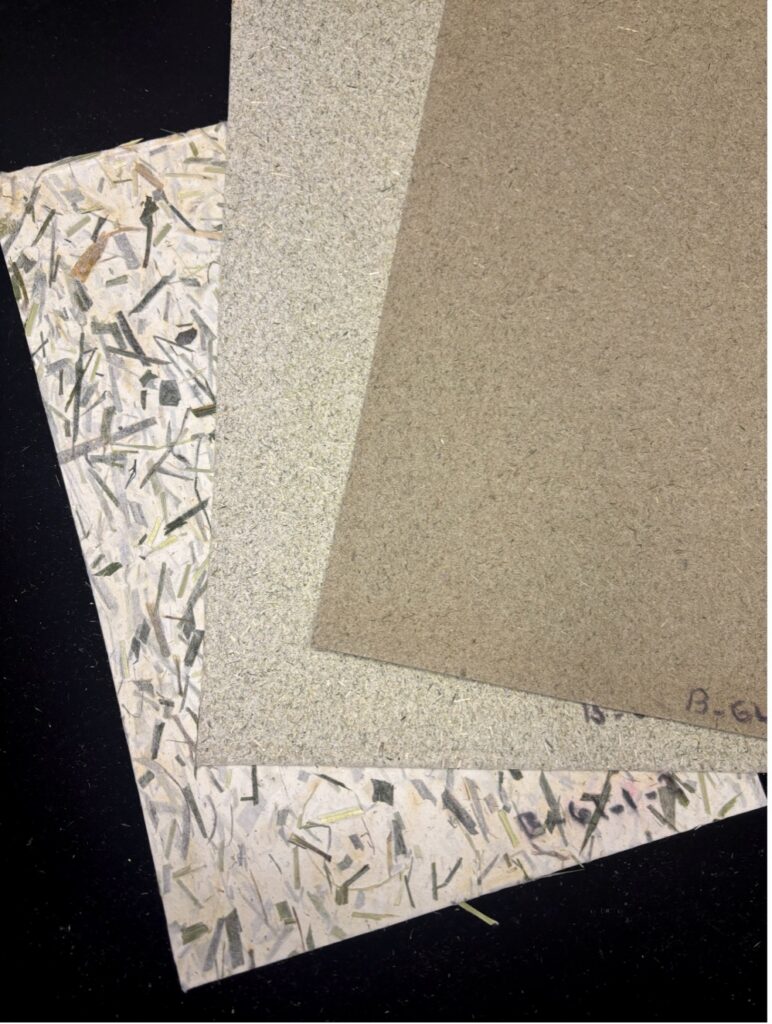
As pressure mounts to reduce forest harvesting, alternative sources of fibre are becoming increasingly important. Grass cell walls provide fibre that can be elaborated into various fibrous products. Insulation and packaging materials as well as windshield boards were prepared at VTT Jyväskylä premises from the timothy and red clover materials harvested during summer 2025. Some wood fibre was included in them, but mixes containing over half of the material from grass showed good technical properties.
Future of Green biorefineries
Grass is a promising option for a bio-based sustainable food and feed ingredient and material production. It can provide opportunities for new local businesses based on new value chains that supply nutrients, technical fibres, platform chemicals and energy from a locally produced raw material. As a consequence, self-sufficiency and security of supply can be improved.
PRIMARY will pave the way for the new bio-based businesses by screening and developing processing methods for grass-based products. Together with stakeholders, the opportunities for new value chains are explored and developed throughout the Europe.
It is exciting to explore new opportunities and see how ideas turn into prototypes within the laboratories. As a next target, we need to work to make these novel fascinating approaches commercially viable and competitive against the currently established alternatives. The courage of entrepreneurs and investors is needed, and some green biorefinery start-ups are already operating in Central Europe. Step by step, the future will be green as grass!